‘Enterprise Resource Planning system', or ERP, is a simple phrase that conveys almost nothing. Let's explain it in simple language.
Any company is required to use sales orders, purchase orders, inventory data, invoices, organizational charts, and accounting figures. In a small firm, this information can be kept in several spreadsheets. However, the situation becomes problematic when two departments have the same data but provide different responses. It is the moment when spreadsheets are not enough anymore.
All this data becomes accessible through a single integrated system. One database. When the sales department submits an order, the warehouse, accounting, and all other departments get the same answer.
The immediate effects of neglecting this issue are rarely noticeable. For example, the warehouse may have one record of a purchase order, while the accounting department has another, making it difficult to determine whether the order has been paid for. Similarly, a report that requires data from five different spreadsheets may take three days to prepare, especially when the information needs to be checked for accuracy and updated. Over time, across multiple departments, these inefficiencies can turn expensive business software into a costly illusion, while employees continue to rely on spreadsheets to get their actual work done.
Think about a kitchen in a busy restaurant. Orders are coming in, tickets are placed on the rail, cooks are working using the same tickets as the waiters are keeping track of, and the cash register should match orders at the end of the day. An ERP system does this for a company, with the exception of the cash register being the general ledger and the orders being the purchase orders.
One must also realize that modern-day ERP systems are modular in nature. You start with the functions of finance and accounts, inventory, and sales, and these functions all continue to interface with one another. The whole history of oil and gas depends on this fact, so keep that in mind.
Why Oil & Gas Needs Specialized ERP
At this point in almost every beginner guide, features start getting mentioned. However, it is better to understand what the first things that break are.
If an oil company implements an average ERP, it will run its payroll, orders, and accounting without problems. The issues appear when the operations team arrives. Wells do not behave like the products in a warehouse. Drilling down doesn’t lead to an asset until the drilling actually happens, with production consistently going down month after month rather than being left aside.
The custody transfer process considers an example where crude oil is moved through the pipeline. The transfer is measured, and both parties must ensure that the numbers agree before making the final deal. This process is known in the industry as a custody transfer, as it is not a transfer of stocks but a legal matter. At the end of the process, the data is recorded in some generic ERP system. There is no trace of who measured what with which meter and under which temperature conditions.
The documentary aspect is also an indispensable part of the offering. Without the Certificate of Analysis, it is illegal to deliver a cargo of gasoline in many places; it is a law and not just a constant bureaucracy. Safety specialists also keep additional records of accidents, work permits, inspections, and risk analysis.
Distance creates another complication. In a standard ERP system, the warehouse exists in one place. However, in this business, there are hundreds of refueling stations, a terminal located at the harbour, and a location that is 200 km away, all using the same information from one system.
The table demonstrates why a specialized ERP exists. If companies start to operate with an ERP that is universal, the system turns into an expensive accounting solution while the operational process is stealthily performed in Excel sheets that surround the system.
The Odoo Community Foundation
So what is the reason to utilize Odoo Community to design an ERP for oil and gas?
Odoo is one of the most widely used open-source business platforms in the world. The Community Module in an open-source form consists of modules that cover all aspects of operations, including accounting, inventory control, purchasing, contracts, manufacturing, and staff management. The organization that implements manages its core system independently, and it works without user license fees, which is important for those companies that want to keep their system instead of leasing it.
That is a true part of the story. Odoo Community does not possess any knowledge about oil and gas. No wellhead has ever been seen by it, so to speak, which is exactly the idea of this program. It gives a good general basis for the establishment of the program and accounting that can be reconciled, inventory that can be counted, accounts and settings that can work, leaving the industry-specific part to build the remaining part over it.
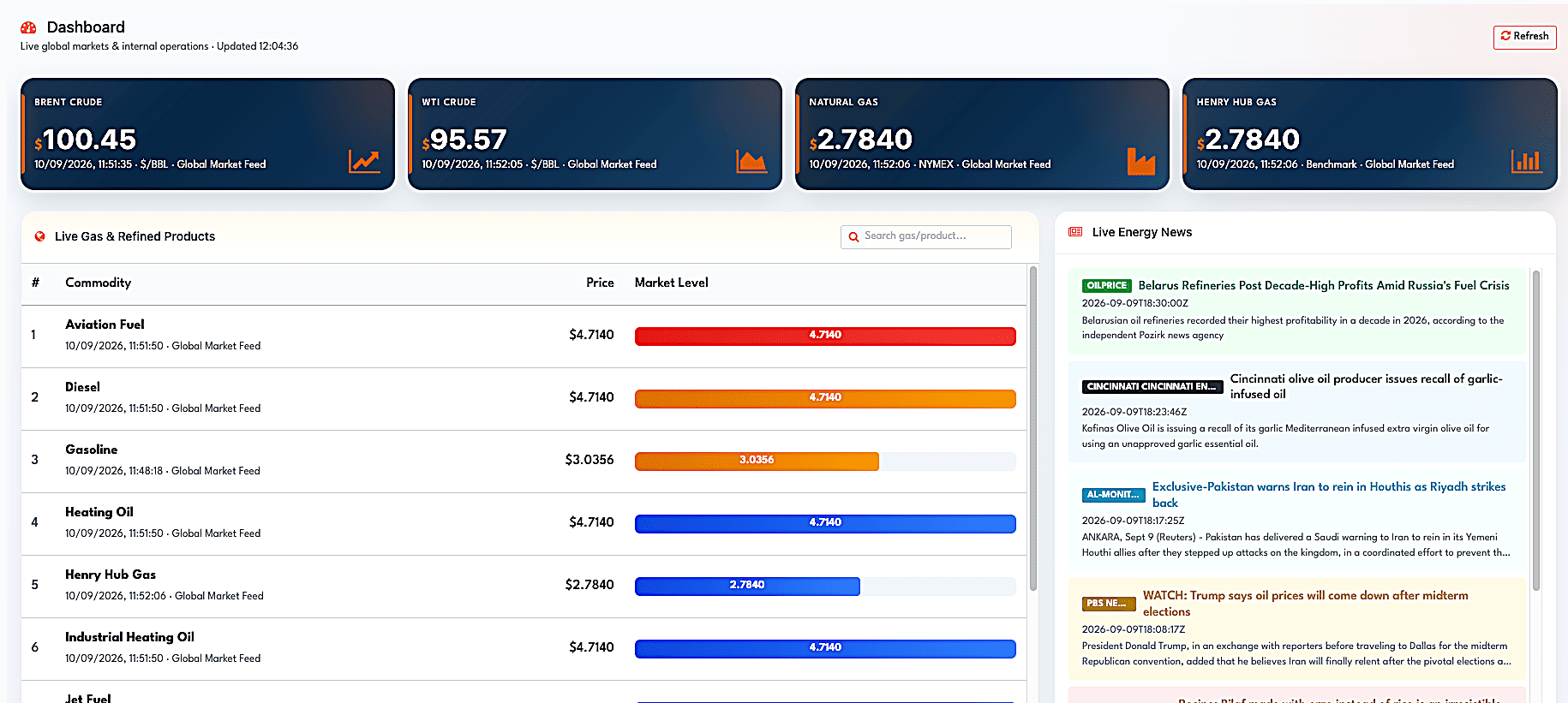
The suite’s home screen: benchmark prices on top, product prices and energy news below.
The Oil ERP suite has an architecture consisting of Odoo Community beneath industry modules at the top, whereas there is a single common database above both of them. Due to sharing the same basic language, the accounting department already knows how to invoice a refinery batch after it has been recorded.
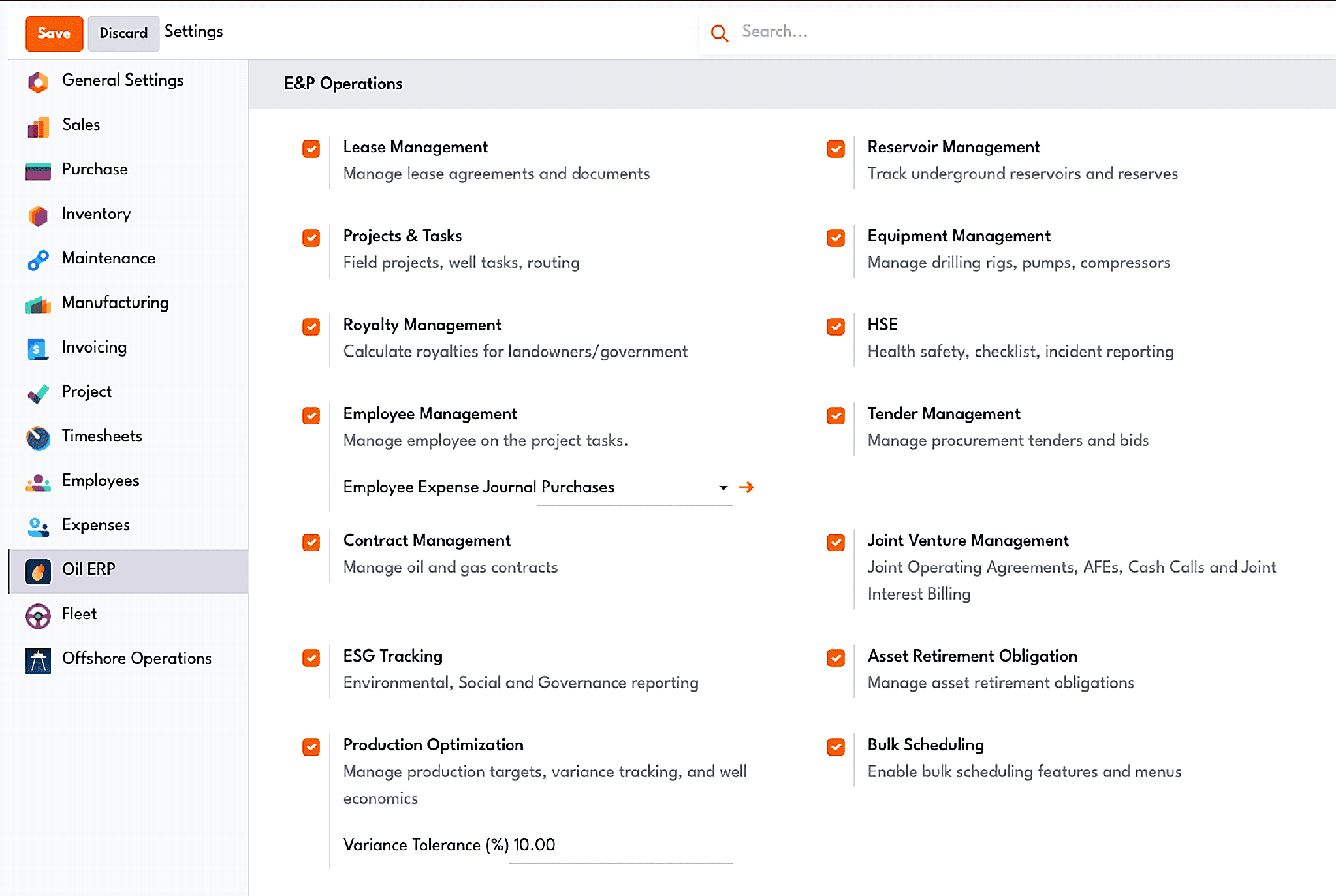
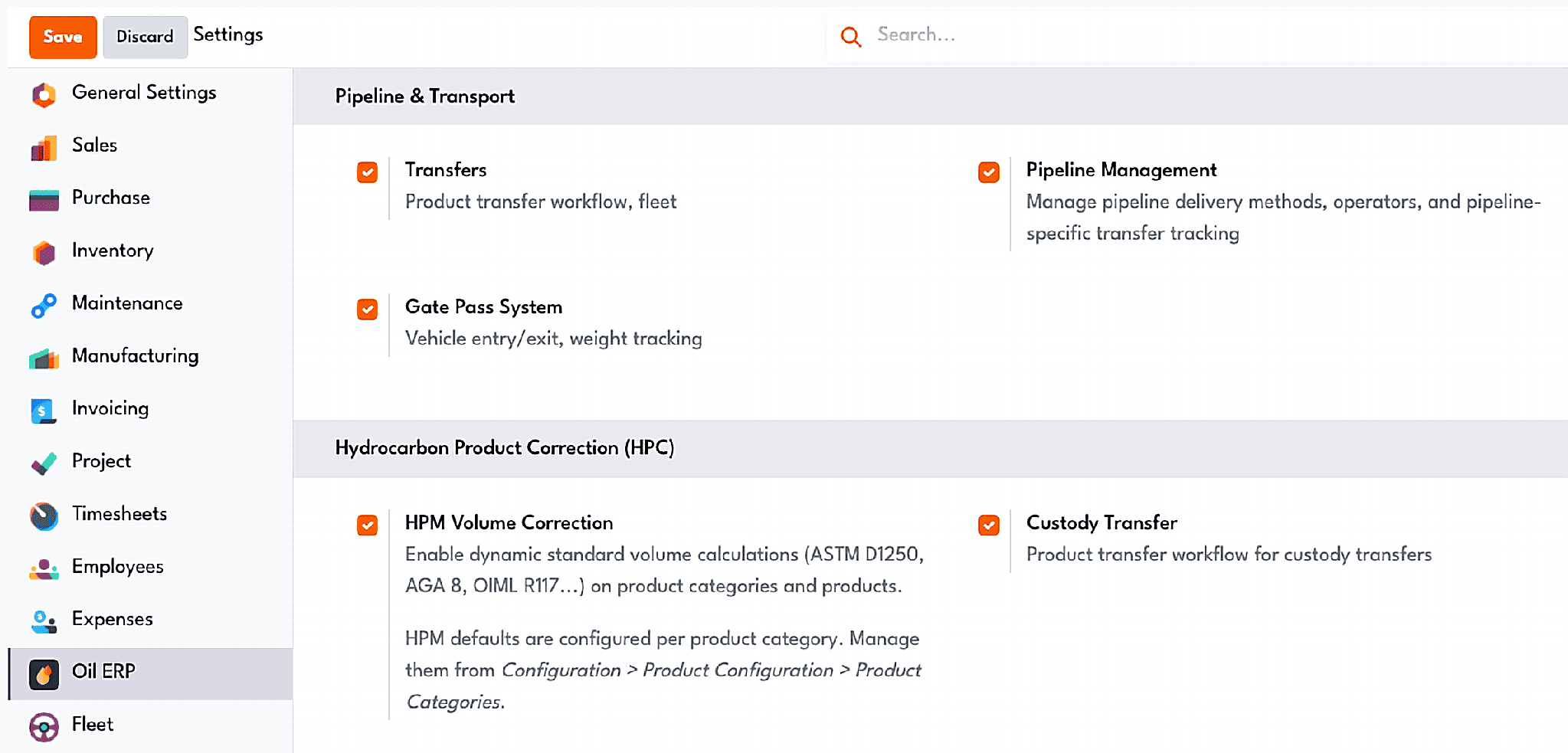
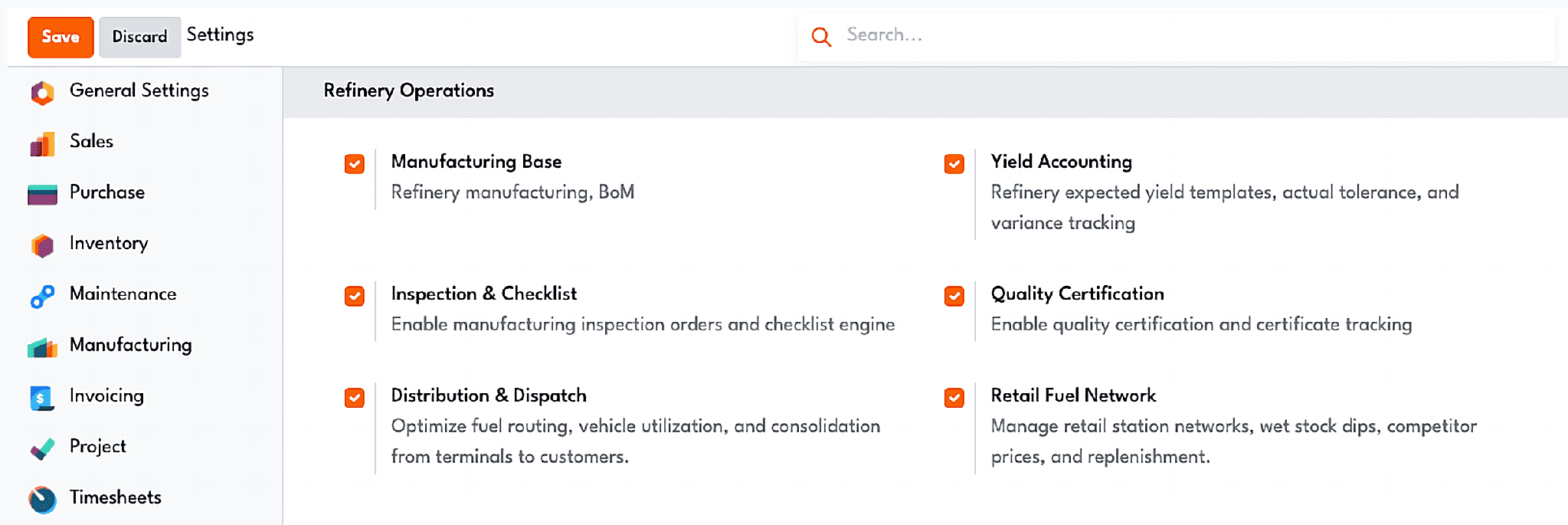
The industry layer switches on from Settings: each checkmark enables an oil and gas module.
Any person who has worked with a modern ERP will find the interface familiar; this includes side toolbar applications, searching functions, and interrelated records. For new users, it will take just one introductory lesson, as the approach is the same for all modules. The key benefit of having one single platform is that it maintains consistency.
Industry-Specific Oil ERP Capabilities
What is termed an operational phase? If the last article discussing the concepts of upstream, midstream, and downstream was read, then this chart will be familiar to readers. The modules track how the production process progresses along the value chain. The process starts upstream; then it continues through the midstream stage to be ultimately sold downstream, and this progress is supervised by HSE.
Upstream
The reservoir module deals with the information gathering concerning each field and each well, thereby obtaining all information concerning the recovery factor, estimated reserves, and life cycle of the field from exploration to decommissioning.
Drilling projects are analysed in a separate module where the AFE budget movements are tracked for each stage ranging from rig mobilisation to demobilisation. Due to the fact that the wells’ condition deteriorates steadily, the production improvement model compares each well’s actual performance with its best possible performance.
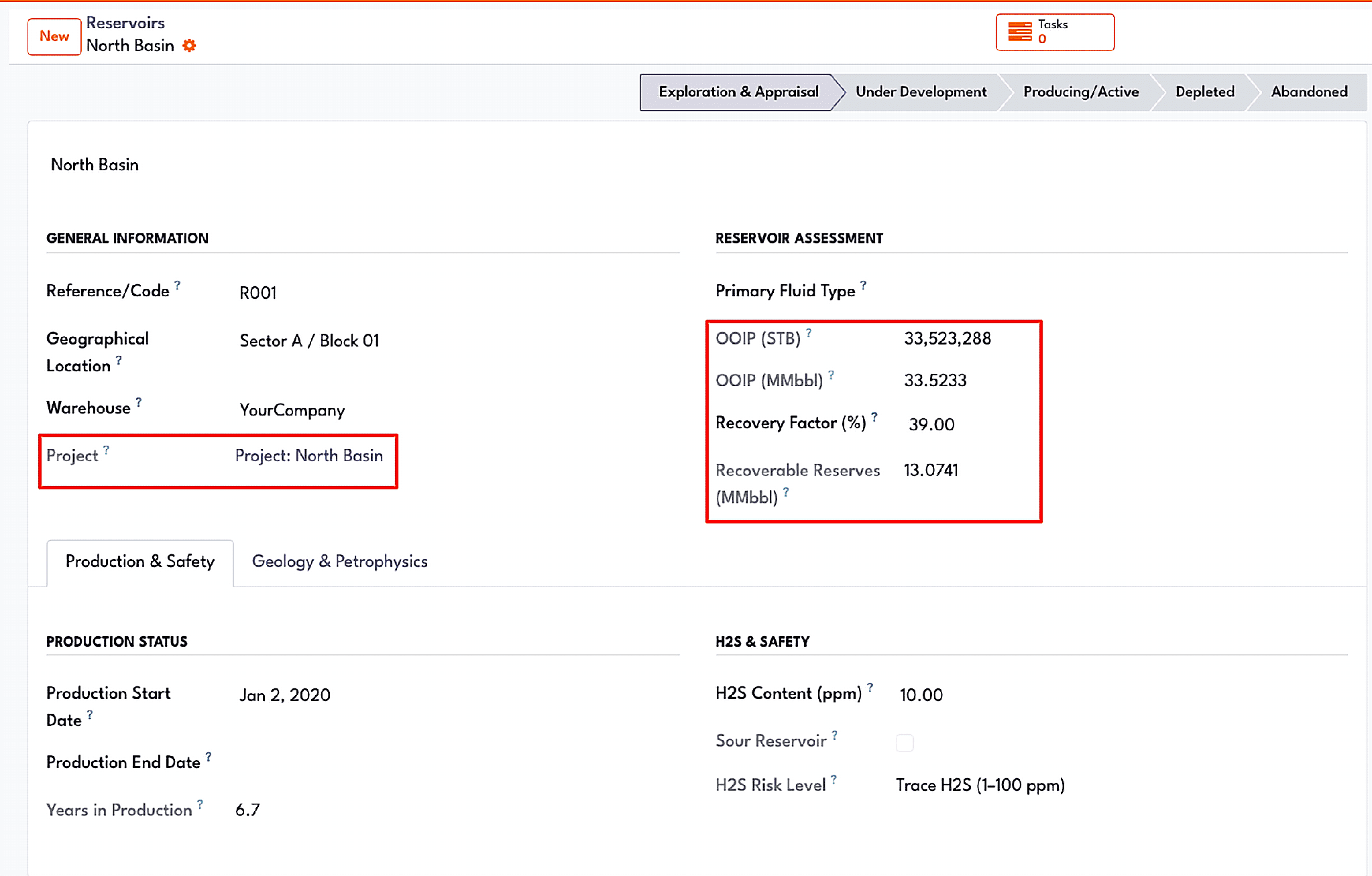
A reservoir record: lifecycle stage, estimated reserves, and recovery factor.
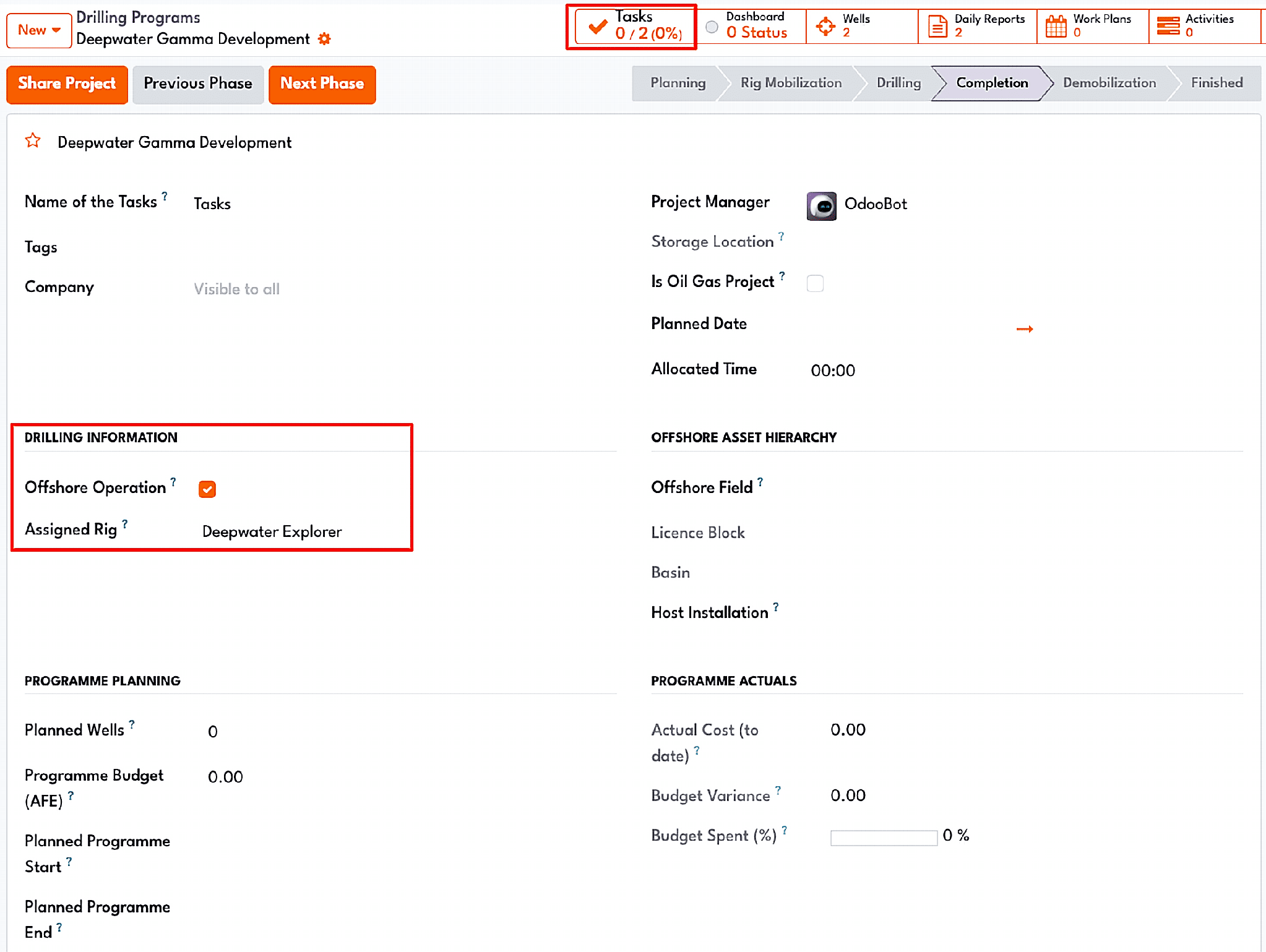
A drilling programme: phases from planning to demobilization, with rig and AFE budget.
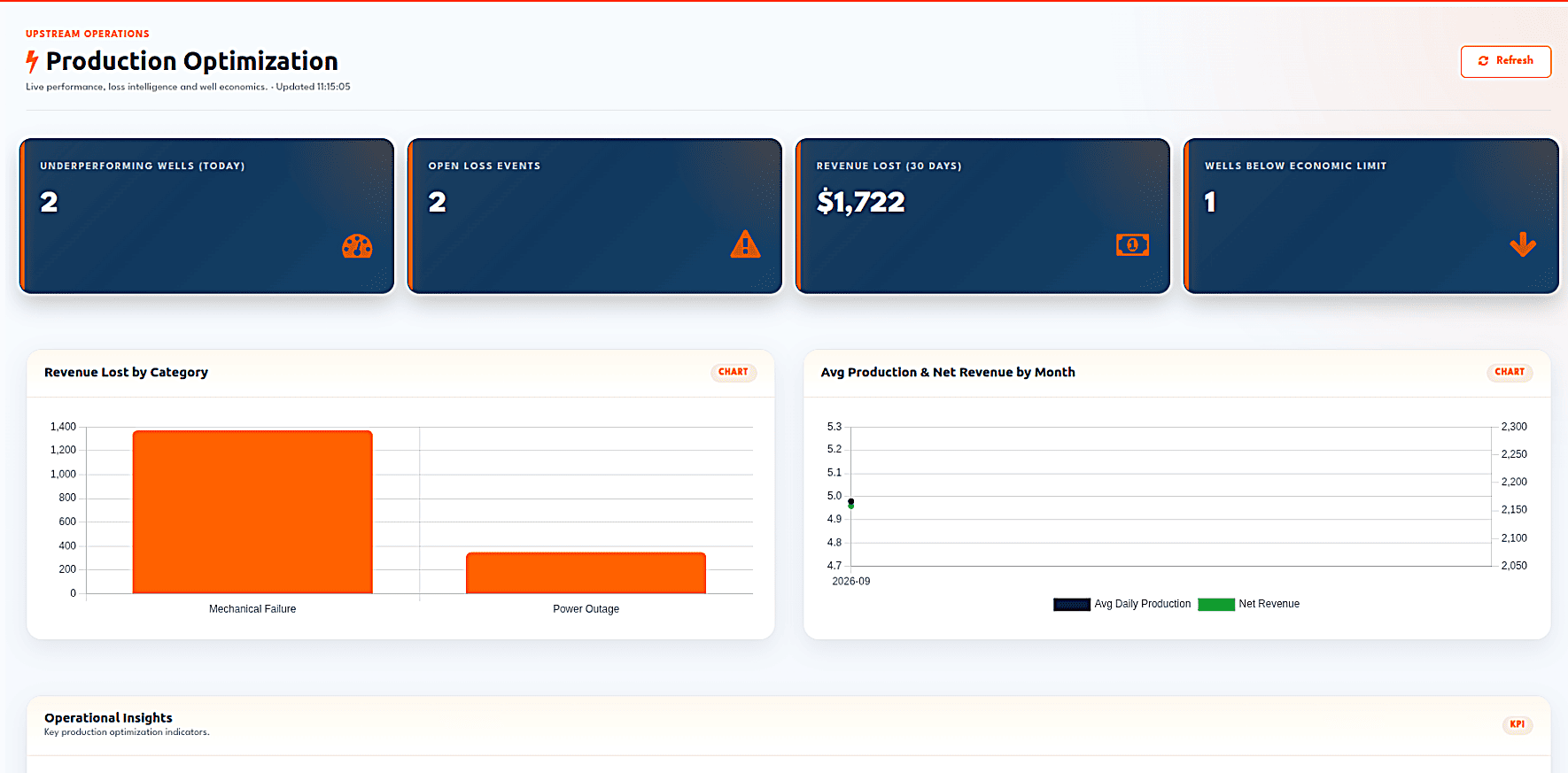
Production optimization: underperforming wells and revenue loss on one screen.
Midstream
In a business model where deliveries are crucial, documents of transfer are expected to either contain information about the method and time of transfer through pipelines or outline the custody transfer principles along with associated records, including source, destination, method of measurement, and details of a stock transfer. This document can be used in cases when two companies start disputing a shipment several months later.
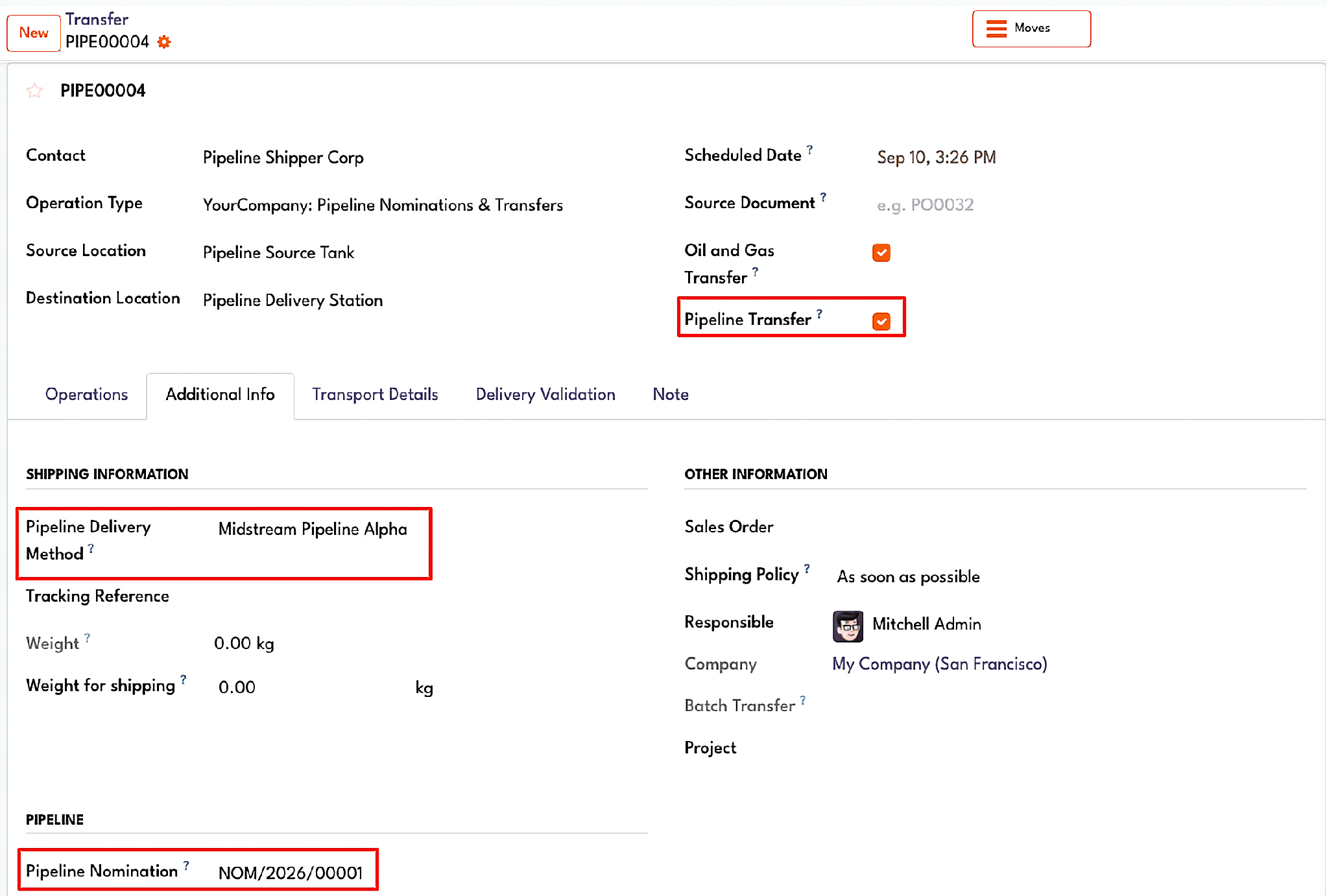
A pipeline transfer: delivery method and timing recorded on the transfer itself.
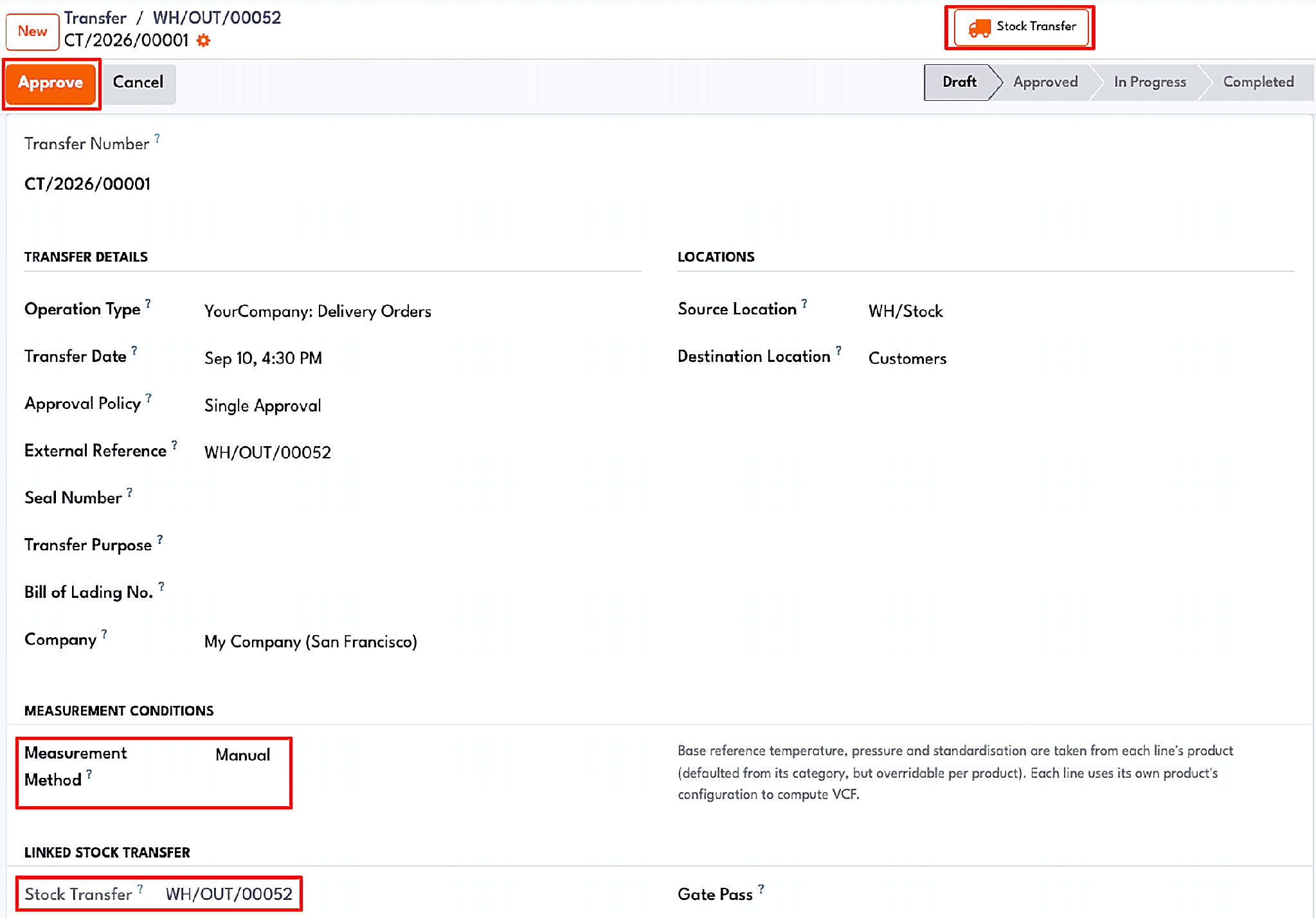
A custody transfer record: measurement method, locations, and the linked stock transfer.
Downstream
The refinery dashboard keeps track of orders, checks, and the quality pass percentage. A diesel specification, for example, defines the limits of sulphur content and the ISO testing process used for its verification. Note that specifications exist as true documents instead of PDFs. All documents accompany the cargo, and Certificates of Analysis are prepared based on results obtained from different batches. Lastly, fuel stations register dip readings and meter readings in daily records, which are reconciled with account books.
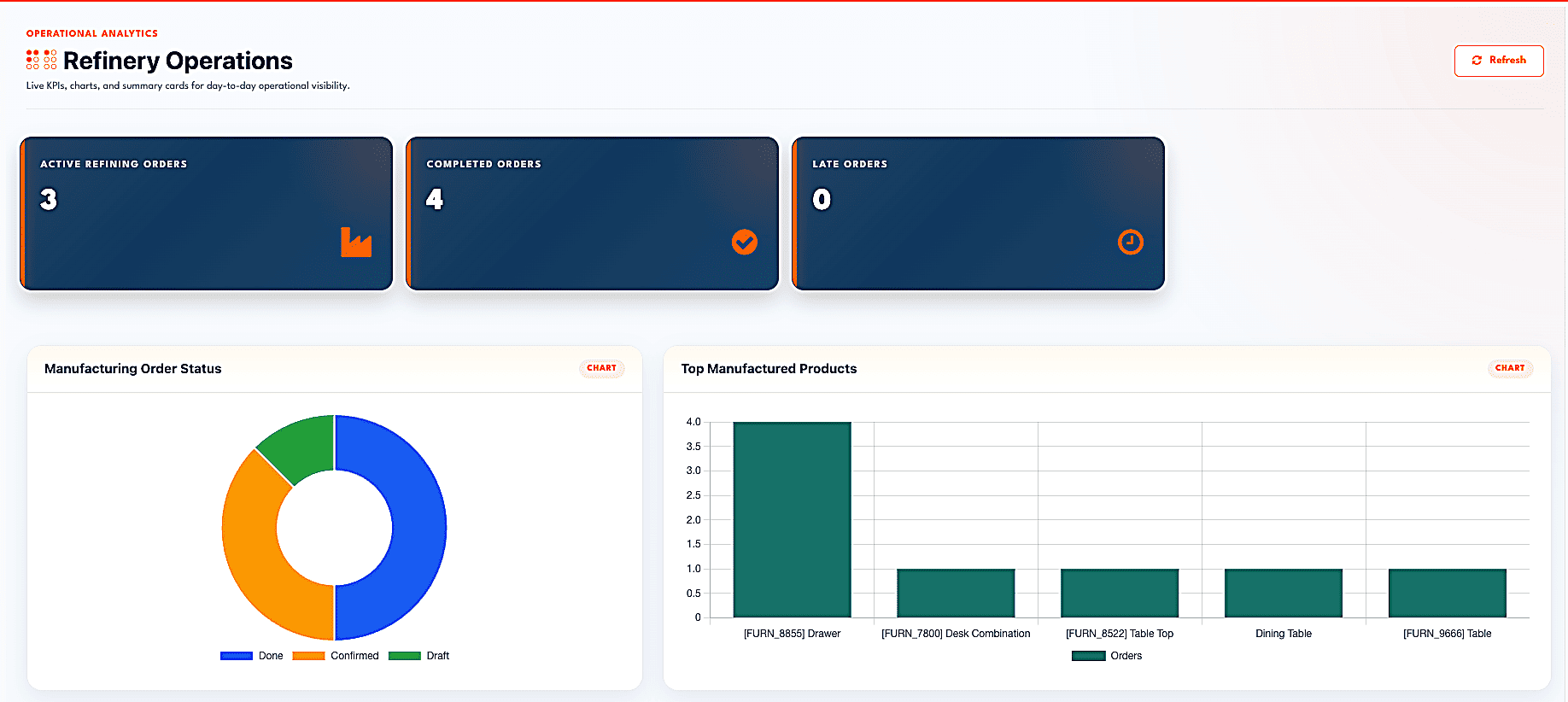
Refinery operations: refining orders, inspections, and quality pass rate at a glance.
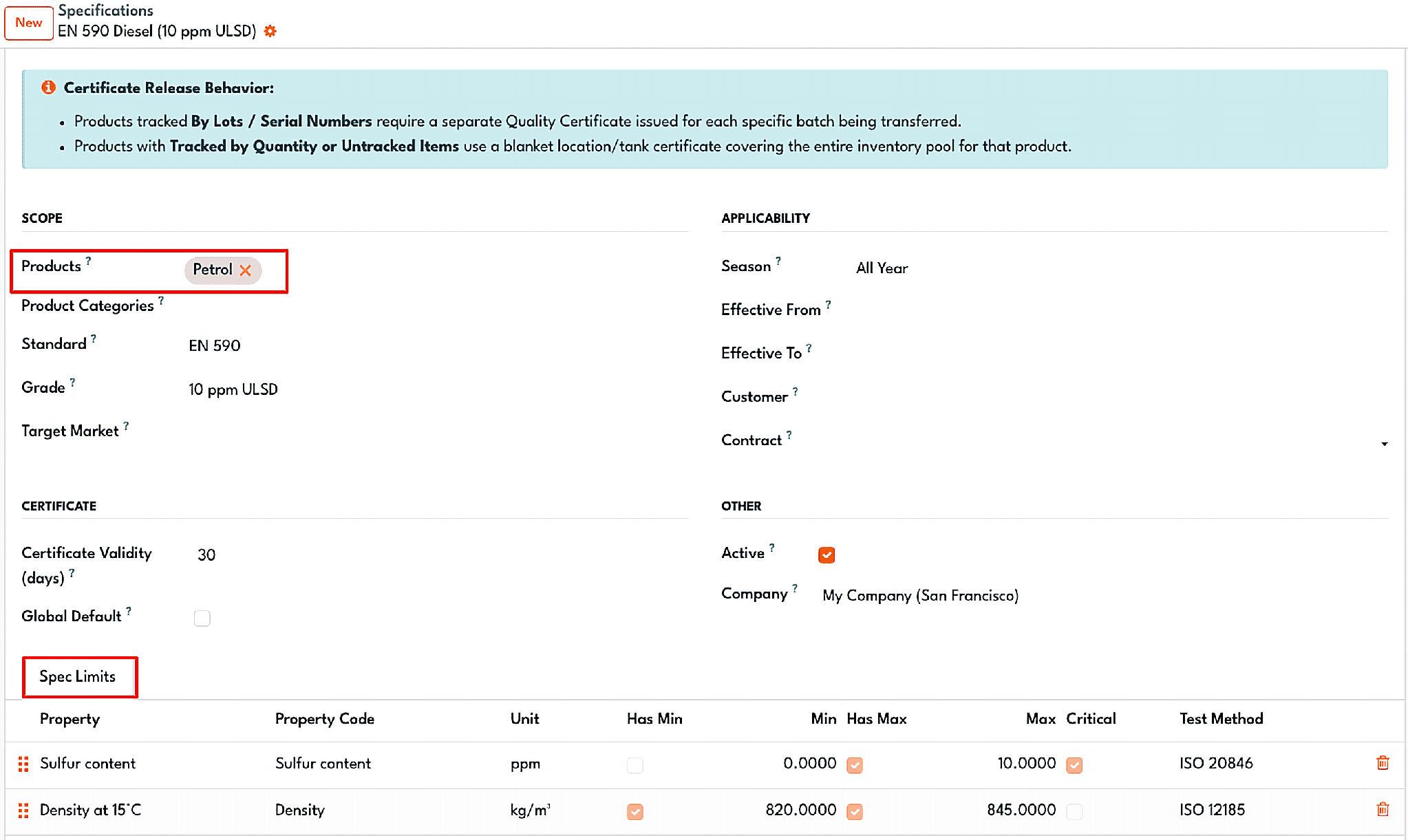
A product specification: sulphur capped at 10 ppm, checked against ISO test methods.
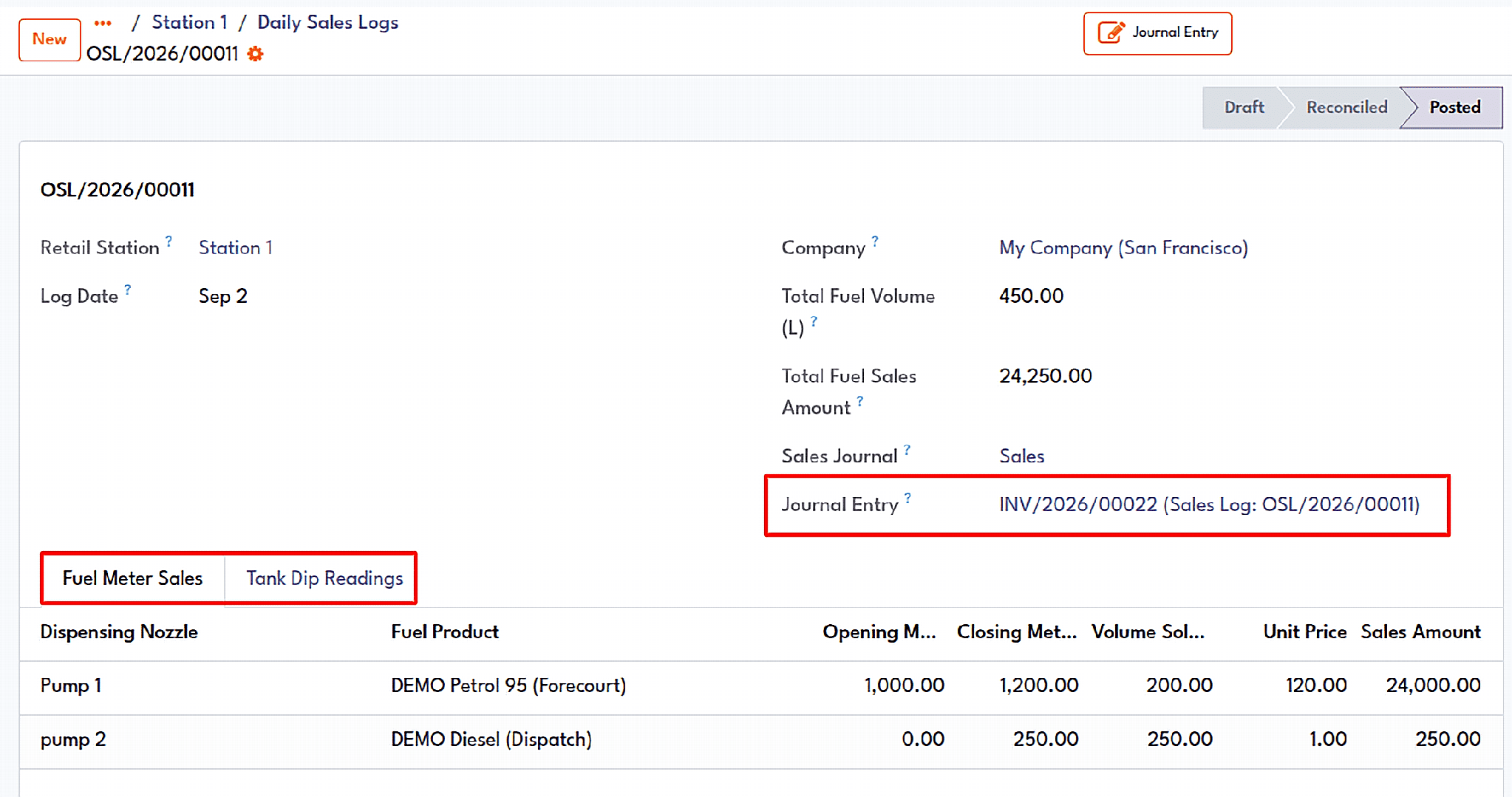
A station’s daily sales log: pump meters and tank dips reconciled into accounting.
HSE
Refineries transmit dangerous materials, hot machinery carries pipelines across highways, and wells hold pressure, so it makes sense that regulators want to see records. All areas of HSE are covered within one module, through which we can see things like incidents and work permits, inspections, and risk evaluations on one screen.
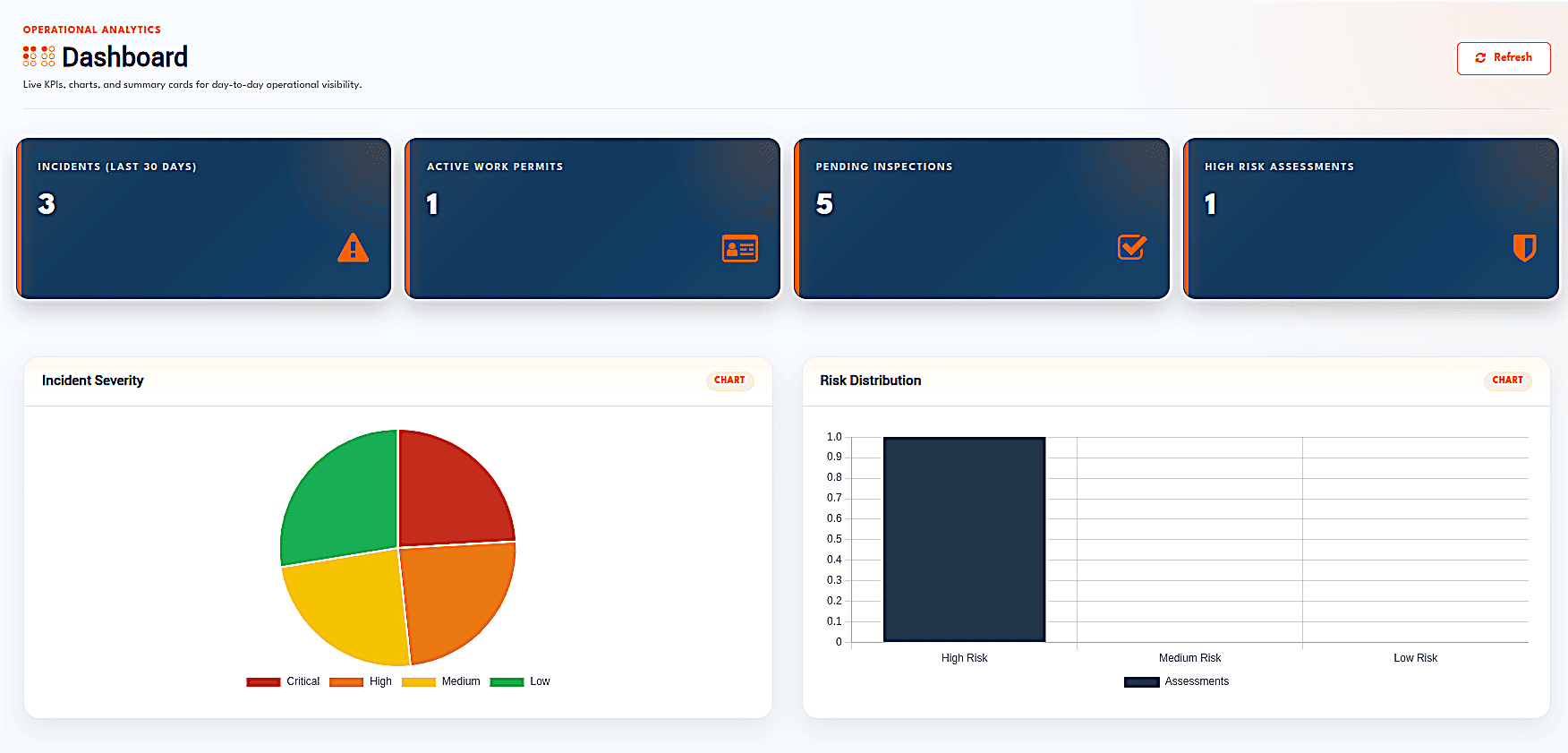
The HSE dashboard: incidents, work permits, inspections, and risk assessments.
The most important part is also the least obvious. Each module writes to the same database used by accounting. The voyage of a single barrel appears twice: once as money and once as operational records. You've discovered a leak when those two points of view diverge, and it's beneficial to be aware of this early on.
Where That Leaves You
ERP is essentially the organization's common memory. Some of the main problems that the oil and gas industry deals with the reduced number of wells and measured transfer, quality documentation, and safety records are not easily accommodated by the usual ERPs. By using the Oil ERP suite, the oil and gas industry gets an additional layer to the strong base represented by Odoo Community.
Learn what part of the value chain your business operates in and start with the modules that correspond to this area. This is one of the possible conclusions that may be drawn from this tutorial. After that, the other parts of the map will be easily interpreted.
Also, the next time someone mentions ERP in the meeting, you will be able to ask a more appropriate question. What is this ERP constructed for, and what area does it serve? You will no longer be a novice.
An ERP is a shared system of record that keeps sales, purchasing, inventory, and accounting telling the same story. Oil and gas needs more than that, because wells decline, custody transfers are legal events, products need certificates, and safety needs its own records. Oil ERP solves this by placing industry modules for upstream, midstream, downstream, and HSE on top of Odoo Community, all writing to a single database.
That shared database is the real benefit. Every barrel is recorded once as an operational fact and once as money, and when the two disagree, you find out early. Start with the segment of the value chain your business actually works in, and the rest of the suite will be ready when you need it.
To read more about How to Manage Waste Efficiently in Odoo 19 with Waste Management ERP, refer to our blog How to Manage Waste Efficiently in Odoo 19 with Waste Management ERP.